With certain types of business, such as any that operate primarily with cash sales, high receivables turnover ratio may not necessarily point to business health. You may simply end up with a high ratio because the small percentage of your customers you extend credit to are good at paying on time. High accounts receivable turnover ratios are more favorable than low ratios because this signifies a company is converting accounts receivables to cash faster. This allows for a company to have more cash quicker to strategically deploy for the use of its operations or growth.
- Their lower accounts receivable turnover ratio indicates it may be time to work on their collections procedures.
- It gives you a snapshot of collection efficiency but is merely a starting point for further analysis.
- When making comparisons, it’s ideal to look at businesses that have similar business models.
- If that feels like a heavy lift, consider investing in expense tracking software that does the organising for you.
- Companies with more complex accounting information systems may be able to easily extract its average accounts receivable balance at the end of each day.
- Companies with efficient collection processes possess higher accounts receivable turnover ratios.
Learn At Your Own Pace With Our Free Courses
In this section, we’ll look at Alpha Lumber’s (fictional) financial data to calculate its accounts receivable turnover ratio. Then, we’ll discuss what the company’s ratio says about its current status and identify areas for improvement. As a rule of thumb, sticking with more conservative policies will typically shorten the time you have to wait for invoiced payments and save you from loads of cash flow and investor problems later on.
Receivables Turnover Calculator
It measures the value of a company’s sales or revenues relative to the value of its assets and indicates how efficiently a company uses its assets to generate revenue. A low asset turnover ratio indicates that the company is using its assets inefficiently to generate sales. A high ratio can also suggest that a company is business report example conservative when it comes to extending credit to its customers. Conservative credit policies can be beneficial since they may help companies avoid extending credit to customers who may not be able to pay on time. The more accurate and detailed your invoices are, the easier it is for your customers to pay that bill.
Accounting Calculators
At the beginning of the year, in January 2019, their accounts receivable totaled $40,000. To find their average accounts receivable, they used the average accounts receivable formula. Whether you use accounting software or not, someone needs to track the money in and money out. The faster you catch a missed payment, the faster, and more likely, your customer is to pay. However, a turnover ratio that’s too high can mean your credit policies are too strict.
In some industries, credit cycles of 60 days are common, decreasing AR turnover ratios. As can be seen from the receivable turnover ratio formula, this financial metric has quite a simple equation. The higher the number of days it takes for customers to pay their bills results in a lower receivable turnover ratio. You can find all the information you need on your financial statements, including your income statement or balance sheet. Calculating your accounts receivable turnover ratio can help you avoid negative cash flow surprises. A low accounts receivable turnover ratio, on the other hand, often indicates that the credit policies of the business are too loose.
A higher accounts receivable turnover indicates that a company is collecting payments from its customers more quickly. It suggests efficient management of credit and collection policies, as well as a healthy cash flow position. The receivables turnover ratio is a liquidity ratio which measures how quickly and efficiently a company turns credit sales into cash. The canonical measure uses net credit sales (sales on credit netting out sales returns and allowances), but for companies which do most sales on credit using revenue will work decently as well. The accounts receivable turnover ratio, or “receivables turnover”, measures the efficiency at which a company can collect its outstanding receivables from customers. The receivables turnover ratio is part of a company’s financial planning and analysis process.
Learn financial statement modeling, DCF, M&A, LBO, Comps and Excel shortcuts. In effect, the amount of real cash on hand is reduced, meaning there is less cash available to the company for reinvesting into operations and spending on future growth. One of the easiest ways to bring context to your data is to examine your results against benchmarks. In AR turnover’s case, there are very few definitive benchmarks publicly available.
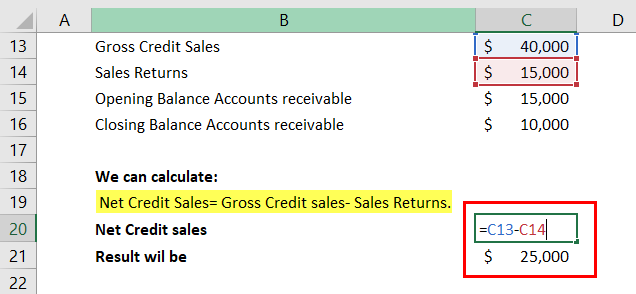
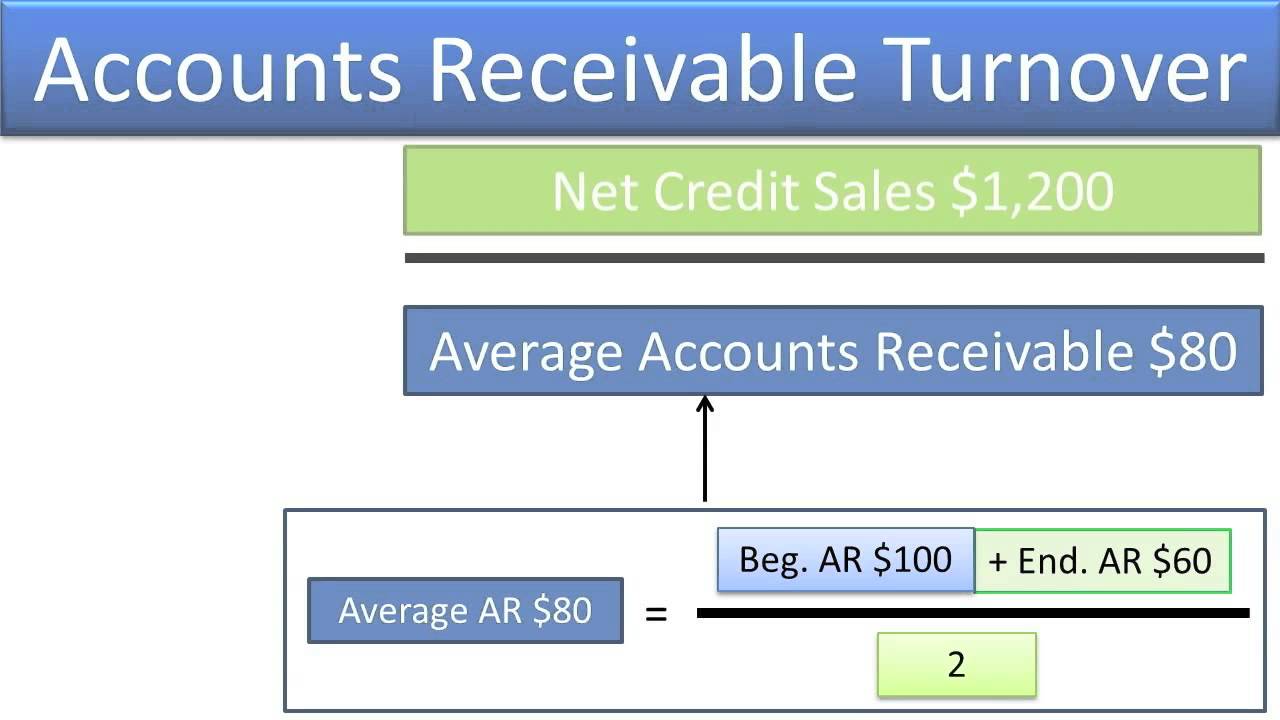
Net credit sales represent the total credit sales during a specific period, while average accounts receivable is calculated by adding the beginning and ending accounts receivable balances and dividing by 2. If the accounts receivable turnover is low, then the company’s collection processes likely need adjustments in order to fix delayed payment issues. The accounts receivable turnover formula considers just credit sales since cash sales do not create receivables. You receive cash immediately, bypassing the need to record receivables. You will learn why a low ratio indicates long collection times in a later section where we explain the AR turnover ratio formula and an example. Furthermore, a low accounts receivable turnover rate could indicate additional problems in your business—ones that are not due to credit or collections processes.
Moreover, although typically a higher accounts receivable turnover ratio is preferable, there are also scenarios in which your ratio could be too high. A too high ratio can mean that your credit policies are too aggressive, which can lead to upset customers or a missed sales opportunity from a customer with slightly lower credit. If you are running a business no matter the size, micro, small medium or large, and you want to maximize your profits, you need to offer credit sales to your customers. A higher turnover ratio means you don’t have outstanding receivables for long. Your customers pay quickly or on time, and outstanding invoices aren’t hurting your cash flow.